Showing posts with label plant. Show all posts

1/07/2008

Dragon Whiskers Plant

[ . BACK to DARUMA Museum TOP . ]

:::::::::::::::::::::::::::::::::::::::::::::::::::::::::::::::::::::::::::::::::::::::::::::::::::::

"dragon jewel", berry of the dragon, ryuu no tama
. . . . . 竜の玉, 龍の玉 りゅうのたま

kigo for winter

fruit of the dragon whiskers plant, ryuu no hige no mi
竜の髯の実(りゅうのひげのみ)
fruit of the snake whiskers plant, ja no hige no mi
蛇の髯の実(じゃのひげのみ)
bouncing ball, hazumidama 弾み玉(はずみだま)

ryu no hige

Ophiopogon japonicus, Mondo grass, lily turf, snakebeard


Click HERE for some photos !

The berry of the lily "dragon whiskers" ryuu no hige. Looks like a green ball, but becomes dry and rather shining blue during winter. Because the fruit is rather strong, children like to play ball with it. The plant grows like a weed in my garden and we enjoy looking at the shiny berries covered in snow sometimes.

The grass is perennial and grows well in shady places, building a soft carpet. It is native to Japan and Korea.

:::::::::::::::::::::::::::::::::::::::::::::::::::::::::::::::::::::::::::::::::::::::::::::::::::::

bohimei wa ise-shinkurou ryuu no tama

the epitaph
is Ise Shinkurou...
the berry of dragon-whisker plant


Suzuki Keiko

*Ise Shinkuroo is an name of Hoojyoo Soo-Un who governed Tokyo area in 16th century.
http://homepage2.nifty.com/shirawobi/07.01shuukuEnglish.html


:::::::::::::::::::::::::::::::::::::::::::::::::::::::::::::::::::::::::::::::::::::::::::::::::::::

地球この水のひとつぶ竜の玉   
chikyuu kono mizu no hitotsubu ryuu no tama

on earth, one drop
of precious water -
berry of the dragon
     

Tsuji Minako 辻 美奈子
(Tr. Gabi Greve)

xxxxxxxxxxxxxxxxxxxxxxxxxxxxxxxxxxxxx

shhippo no kireta tokage no ko, kawari ni tsukeru ryuu no tama

A baby lizard missing its tail,
in its place
a dragon's jewel.

key
http://archives.neohapsis.com/archives/php/2000-04/0062.html

:::::::::::::::::::::::::::::::::::::::::::::::::::::::::::::::::::::::::::::::::::::::::::::::::::::
BACK TO
DRAGON and HAIKU


Daruma Museum, Japan

[ . BACK to World Kigo Database . ]

:::::::::::::::::::::::::::::::::::::::::::::::::::::::::::::::::::::::::::::::::::::::::::::::::::::

2/03/2006

Cherry Tree

:::::::::::::::::::::::::::::::::::::::::::::::::::::::::::::::::::::::::::::::::::::::::::::::::::::
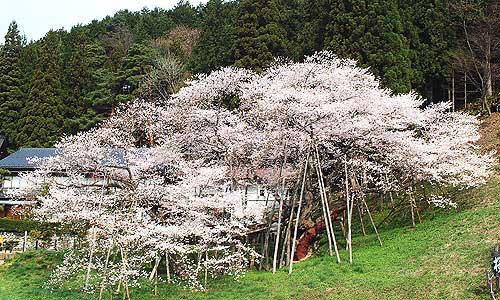
The Lying-Dragon Cherry Tree

This tree is more than 1100 years old. Its stem looks like a dragon crouching on the earth, therefore the name Cherry tree like a crouching dragon, garyuu zakura.

It is 20 m high, the branches spred for about 30 meters in diameter. The branches are propped up by dozens of Daliesque crutches.
In 1973 it was designated as a Natural Cultural Property.

It is located in the compounds of the Temple Daidoo-Ji in Ichi no Miya Village, Takayama Town, Gifu Prefecture. You can see it from the local train station.

An example of Edohigan Cherry Tree (Prunus pendula form. ascendens), the symbol of Japan. In 1931, it was named after the lying Dragon, before that, it was named the "Large Cherry Tree of Daidoo-Ji Temple". The flowering time is the middle of April.

:::::::::::::::::::::::::::::::::::::::::::::::::::::::::::::::::::::::::::::::::::::::::::::::::::::

© 飛騨ニ大名桜
http://homepage1.nifty.com/fuufuyuuyuu/sub11/000430.htm


:::::::::::::::::::::::::::::::::::::::::::::::::::::::::::::::::::::::::::::::::::::::::::::::::::::

Copyright © 2005 Gifu Prefectural Government.
http://www.pref.gifu.lg.jp/pref/gib/5_no1/0404/5010.htm

国指定天然記念物「臥龍桜」

臥龍桜は、幹枝が龍の臥した姿に似ていることから名付けられた樹齢1000年余の桜で、高さは20m、枝張りは30m、目通り7.3mにも及ぶ、日本を代表する桜の大樹です。

他の名木同様、臥龍桜も台風による被害を多く受けて、その都度、再生措置を図ってきました。またそれ以外に、平成6年から8年にかけて大規模な調査を開始し、その原因が臥龍桜周辺の土壌にあり、臥龍桜の多くの根が酸欠で枯死していたことがわかりました。 

それが桜の生育を阻害する最もな要因であるとして、平成9年から土壌改良を中心とした保護工事を実施し、生育を阻害する土壌の搬出と、地元の特産であるセラミック炭を36%混入した良質土壌の埋め戻しを実施しました。
この結果、再び臥龍桜には多くの桜花がつきはじめ、木にも躍動感がみなぎってきました。

所在地
岐阜県高山市一之宮町亀ヶ平

:::::::::::::::::::::::::::::::::::::::::::::::::::::::::::::::::::::::::::::::::::::::::::::::::::::

© 飛騨一之宮観光協会
http://www.hidamiya.com/garyuu/

幹枝の形が龍の臥した姿に似ていることから名付けられた国指定天然記念物「臥龍桜」。


:::::::::::::::::::::::::::::::::::::::::::::::::::::::::::::::::::::::::::::::::::::::::::::::::::::

© Wikipedia
http://ja.wikipedia.org/wiki/%E8%87%A5%E9%BE%8D%E6%A1%9C

臥龍桜(がりゅうざくら)は岐阜県高山市一之宮町にある桜の名称。龍が地に臥しているように見えることからその名が付いた。1973年(昭和48年)に国の天然記念物に指定された。
種類はエドヒガンザクラ。1100歳を越える老樹である。

大幢寺(曹洞宗)の境内にあり、1989年(平成元年)に周辺が臥龍公園として整備された。なお昔は「大幢寺(だいどうじ)の大桜」と呼ばれていたが、寺の和尚(道仙)により1931年(昭和6年)に臥龍桜と名付けられた。毎年4月中旬に桜まつりが開かれる。JR飛騨一ノ宮駅のすぐ近くであり駅舎や停車中の車両の中からも見ることができる。

:::::::::::::::::::::::::::::::::::::::::::::::::::::::::::::::::::::::::::::::::::::::::::::::::::::

Daigo Cherry Tree another huge tree


Daruma Museum, Japan