Showing posts with label Daruma. Show all posts

12/23/2015

2012 Year of the Dragon

[ . BACK to DARUMA Museum TOP . ]
:::::::::::::::::::::::::::::::::::::::::::::::::::::::::::::::::::::::::::::::::::::::::::::::::::::

2012 - Year of the Dragon


初夢や辰の上に立つ富士の山
hatsu yume ya tatsu no ue ni tatsu Fuji no Yama

first dream -
a dragon at the foot
of Mount Fuji


Katsushika Hokusai 葛飾北斎

:::::::::::::::::::::::::::::::::::::::::::::::::::::::::::::::::::::::::::::::::::::::::::::::::::::


tatsu 辰 Dragon
ryuu,ryoo 龍 / 竜 dragon


The TATSU Dragon is one of the 12 zodiac animals of the Asian lunar calendar.
He is therefore a well-liked animal in folk art and handicraft.

It comes as a papermachee doll, clay doll or clay bell and other materials.

. Tatsu 辰 The Zodiac Dragon

::::::::::::::::::::::::::::::::::::::::::::::::::::::::::::::::::::::::::::::::::::::::::::::::::::: 


2012年のだるま Daruma for 2012

干支だるま《辰》


source : takasaki-kankoukyoukai.or.jp

.................................................................................


Kurashiki, shrine Ashitaka Jinja 倉敷市笹沖, 足高神社
for the year Heisei 24 平成24年


At the shrine Tsurusaki Jinja 鶴崎神社 they are preparing a huge dragon ema with two dragons, in auspicious white and red, made from origami paper.
They show a "dragon going to heaven" 昇り竜
symbolizing the future for Japan, which must go up after so much damage in 2011.


:::::::::::::::::::::::::::::::::::::::::::::::::::::::::::::::::::::::::::::::::::::::::::::::::::::


Some labyrinths to work through!


Find the differences !
間違い探しの年賀状 「辰(たつ)の餅つき」


迷路の年賀状 「辰(たつ)とだるま」


Look at many more wonderful Dragon games :

source : blog.kotoba.littlestar.jp


:::::::::::::::::::::::::::::::::::::::::::::::::::::::::::::::::::::::::::::::::::::::::::::::::::::


Dragon Bisquits in a Daruma Box
小戸橋製菓おすすめの「お年賀ギフト」


. . . . .


::::::::::::::::::::::::::::::::::::::::::::::::::::::::::::::::::::::::::::::::::::::::::::::::::::: 


昇龍開運絵馬


source : www.murakudo.com


::::::::::::::::::::::::::::::::::::::::::::::::::::::::::::::::::::::::::::::::::::::::::::::::::::: 


source : web-room-krym4.com


::::::::::::::::::::::::::::::::::::::::::::::::::::::::::::::::::::::::::::::::::::::::::::::::::::: 


nengajoo 年賀状 New Year Greeting Cards


Click on the images to see more !

::::::::::::::::::::::::::::::::::::::::::::::::::::::::::::::::::::::::::::::::::::::::::::::::::::: 


New Year Greetings with Daruma


source : maneki_neko


. Nenga 年賀状 New Year Greetings with Daruma .

::::::::::::::::::::::::::::::::::::::::::::::::::::::::::::::::::::::::::::::::::::::::::::::::::::: 


. Kunitokotachi no Mikoto .

龍神「国常立尊」 Kunitokotachi no Mikoto
『日月神示』でも
「日本列島が国常立尊の肉体」だと示されている通り、日本列島は龍体をしている。

"The Japanese Islands
are the body of the Dragon Kunitokotachi.!


::::::::::::::::::::::::::::::::::::::::::::::::::::::::::::::::::::::::::::::::::::::::::::::::::::: 


[ . BACK to WORLDKIGO . TOP . ]
[ . BACK to DARUMA MUSEUM TOP . ]
:::::::::::::::::::::::::::::::::::::::::::::::::::::::::::::::::::::::::::::::::::::::::::::::::::::

1/16/2012

Tenryu-Ji

[ . BACK to DARUMA Museum TOP . ]
:::::::::::::::::::::::::::::::::::::::::::::::::::::::::::::::::::::::::::::::::::::::::::::::::::::

Tenryuuji 天龍寺 ― 天竜寺 Tenryu-Ji
"Heavenly Dragon Temple"


The naming might go back to the Shogun Ashikaga Takauji, who saw a golden dragon above the sky of the temple in a dream.
The dragon symbolizes the emperor Go-Daigo.

Before that, the temple was called

Ryakuooji 暦応寺 Ryakuo-Ji
according to the era name nengoo when it was built.


Tenryū-ji (天龍寺) — more formally known as
Tenryū Shiseizen-ji (天龍資聖禅寺) —

is the head temple of the Tenryū branch of Rinzai Zen Buddhism, located in Susukinobaba-chō, Ukyō Ward, Kyoto, Japan.
The temple was founded by Ashikaga Takauji in 1339, primarily to venerate Gautama Buddha, and its first chief priest was Muso Soseki. Construction was completed in 1345.
As a temple related to both the Ashikaga family and Emperor Go-Daigo, the temple is held in high esteem, and is ranked number one among Kyoto's so-called Five Mountains. In 1994, it was registered as a UNESCO World Heritage Site, as part of the "Historic Monuments of Ancient Kyoto".

In the early Heian period, Empress Tachibana no Kachiko, wife of Emperor Saga, founded a temple called Danrin-ji on the site of present-day Tenryū-ji. The temple fell into disrepair over the next four hundred years.

In the mid-thirteenth century, Emperor Go-Saga and his son Emperor Kameyama turned the area into an imperial villa which they called "Kameyama Detached Palace" (亀山殿, Kameyama-dono). The name "Kameyama", which literally means "turtle mountain", was selected due to the shape of Mt. Ogura, which lies to the west of Tenryū-ji—it is said to be similar to the shape of a turtle's shell. All Japanese temples constructed after the Nara period have a sangō, a mountain name used as an honorary prefix. Tenryū-ji's sangō,
Reigizan (霊亀山, lit. "mountain of the spirit turtle"),
was also selected due to the shape of Mt. Ogura.


The garden, created by Musō Soseki, features a circular promenade around Sōgen Pond (曹源池, sōgenchi), and is registered as both a special place of scenic beauty and a historical landmark.
© More in the WIKIPEDIA !

::::::::::::::::::::::::::::::::::::::::::::::::::::::::::::::::::::::::::::::::::::::::::::::::::::: 


source : lasksnow.blog
Dragon at the ceiling
雲龍図 Cloud Dragon Painting


. . . CLICK here for Photos !

::::::::::::::::::::::::::::::::::::::::::::::::::::::::::::::::::::::::::::::::::::::::::::::::::::: 


me ga deru Daruma 目が出る達磨
"Daruma with protruding eyes"

If you peek into the hole at the head, the ceiling painting of the dragon will appear.

The story of
. "Daruma with protruding eyes" .

.................................................................................


amulet to prevent cancer ガン封じ


A restaurant for vegetarian temple food 精進料理

Annual Festivals
冬の特別「精進料理」(龍門亭)
天龍寺節分会
大方丈 旧「雲龍図」特別公開 鈴木松年画伯
法堂「刺繍八相大涅槃図」特別公開
暁天講座
子供サマースクール(派内寺院のみ)
曹源池庭園
除夜の鐘
source : www.tenryuji.com/info


Homepage of the Temple
京都府京都市右京区嵯峨天龍寺芒ノ馬場町68
source : www.tenryuji.com


関牧翁の筆
. Daruma painted by Seki Bokuoo .
(1903 - 1991)


. Amulets and Talismans from Japan . 


::::::::::::::::::::::::::::::::::::::::::::::::::::::::::::::::::::::::::::::::::::::::::::::::::::: 

Other tempels named Tenryu-Ji

天龍寺 (秋田市) in Akita town

天龍寺 (新宿区) in Shinjuku, Tokyo


Other tempels named Tenryu-In 天龍院

愛宕神社 (行方市玉造甲) 天龍院支配

神谷山天龍院 Ueno, Tokyo

常陸太田市

善光山天龍院法照寺


and quite a few more.

::::::::::::::::::::::::::::::::::::::::::::::::::::::::::::::::::::::::::::::::::::::::::::::::::::: 


Tenryu-Ji Haiku 天龍寺俳句


夏山をはみ出す甍天龍寺
natsuyama o hamidasu iraka Tenryuuji

rooftiles protruding
from the summer mountain -
temple Tenryu-Ji


Urajima Taro
source : 浦島太郎


::::::::::::::::::::::::::::::::::::::::::::::::::::::::::::::::::::::::::::::::::::::::::::::::::::: 

. Dragon Temples  .


[ . BACK to WORLDKIGO . TOP . ]
[ . BACK to DARUMA MUSEUM TOP . ]
:::::::::::::::::::::::::::::::::::::::::::::::::::::::::::::::::::::::::::::::::::::::::::::::::::::

1/05/2012

Sweets with Dragons

[ . BACK to DARUMA Museum TOP . ]
:::::::::::::::::::::::::::::::::::::::::::::::::::::::::::::::::::::::::::::::::::::::::::::::::::::

Sweets with Dragons

Sweets and bisquits for the New Year
eto no kashi 干支の菓子


flat crackers with auspicious symbols
source : www.kanou.com/archives/291


:::::::::::::::::::::::::::::::::::::::::::::::::::::::::::::::::::::::::::::::::::::::::::::::::::::


アイシングクッキー cookies with icing


焼印が刻印された干支の菓子 ema bisquit


With many more :
eto castella 干支カステラ
Edo kawara 江戸瓦「暦(こよみ)
maneki fuku 招福福笑い
干支・辰車
辰の春
季節の上生菓子
eto senbei 干支せんべい rice crackers with zodiac animals

source : painassistant.at


. Ema 絵馬 Votive Plaques, Prayer Tablets .


::::::::::::::::::::::::::::::::::::::::::::::::::::::::::::::::::::::::::::::::::::::::::::::::::::: 


. . . CLICK here for Photos !
干支の菓子


. . . CLICK here for Photos !
eto senbei 干支せんべい sembei


::::::::::::::::::::::::::::::::::::::::::::::::::::::::::::::::::::::::::::::::::::::::::::::::::::: 

dragon sweets -
a balance of calendar
and calories


. WAGASHI - SWEETS Saijiki .


[ . BACK to WORLDKIGO . TOP . ]
[ . BACK to DARUMA MUSEUM TOP . ]
:::::::::::::::::::::::::::::::::::::::::::::::::::::::::::::::::::::::::::::::::::::::::::::::::::::

1/03/2012

Nobori ryu ascending

[ . BACK to DARUMA Museum TOP . ]
:::::::::::::::::::::::::::::::::::::::::::::::::::::::::::::::::::::::::::::::::::::::::::::::::::::

Nobori ryuu 昇り竜 / 登り竜 ascending dragon
昇龍・登龍
climbing dragon, flying dragon, noboriryuu

and tako kites with dragons

This dragon is used for many decorations and paintings.


Here is even one with Daruma
This is a signature on a kite


source : www.townnews.co.jp
招福凧の凧っ平 made by Asami san 浅見宝


:::::::::::::::::::::::::::::::::::::::::::::::::::::::::::::::::::::::::::::::::::::::::::::::::::::


source : ibaraki-hanawa.com


:::::::::::::::::::::::::::::::::::::::::::::::::::::::::::::::::::::::::::::::::::::::::::::::::::::


. Yookaichidako 八日市凧 Giant Tako Kite from Yokaichi . - Shiga


:::::::::::::::::::::::::::::::::::::::::::::::::::::::::::::::::::::::::::::::::::::::::::::::::::::


. Kai no fukuryuu 甲斐の福龍 Lucky Dragon from Kai province .

When the plain of Kofu was still a lake, a dragon lived there. The Gods asked the dragon to make a sacrifice for the people, dry out the lake and give them land to farm in its place.
The dragon agreed to this proposition. In a great whirlwind he swept the water of the lake toward the sky and the plain was born.
The toy shows this "ascending dragon", which is now an amulet for good luck.


:::::::::::::::::::::::::::::::::::::::::::::::::::::::::::::::::::::::::::::::::::::::::::::::::::::


A plant called Nobori Ryu
Climbing Dragon Sacred Lily

Rohdea japonica


source : www.plantdelights.com


::::::::::::::::::::::::::::::::::::::::::::::::::::::::::::::::::::::::::::::::::::::::::::::::::::: 


Kaidan Nobori Ryu - The Blind Woman's Curse
directed by Teruo Ishii and starring Meiko Kaji
. . . CLICK here for Photos !


:::::::::::::::::::::::::::::::::::::::::::::::::::::::::::::::::::::::::::::::::::::::::::::::::::::


. . . CLICK here for Photos !


::::::::::::::::::::::::::::::::::::::::::::::::::::::::::::::::::::::::::::::::::::::::::::::::::::: 

[ . BACK to WORLDKIGO . TOP . ]
[ . BACK to DARUMA MUSEUM TOP . ]

:::::::::::::::::::::::::::::::::::::::::::::::::::::::::::::::::::::::::::::::::::::::::::::::::::::

12/17/2006

Daruma Dolls

:::::::::::::::::::::::::::::::::::::::::::::::::::::::::::::::::::::::::::::::::::::::::::::::::::::

© Daruma San Iro Iro だるまさん色々

Great Collection of Daruma Dolls !

The 12 Zodiac Animals with a Daruma. One of them is the Dragon !

:::::::::::::::::::::::::::::::::::::::::::::::::::::::::::::::::::::::::::::::::::::::::::::::::::::


干支巳だるま粘土 85×65mm


干支辰だるま 粘土 110×115mm
Made from Clay


干支辰だるま 親子 139×50mm
Father and Child


干支辰だるま 紙粘土 75×58mm


干支辰だるま 繭 41×25mm


:::::::::::::::::::::::::::::::::::::::::::::::::::::::::::::::::::::::::::::::::::::::::::::::::::::


source : sayama/travelogue

From Makiba Onsen, Saitama


::::::::::::::::::::::::::::::::::::::::::::::::::::::::::::::::::::::::::::::::::::::::::::::::::::: 


. The Dragon Art Gallery


. DRAGON and HAIKU 


[ . BACK to WORLDKIGO . TOP . ]
[ . BACK to DARUMA MUSEUM TOP . ]

:::::::::::::::::::::::::::::::::::::::::::::::::::::::::::::::::::::::::::::::::::::::::::::::::::::

12/09/2006

Blue Dragon Hermit

:::::::::::::::::::::::::::::::::::::::::::::::::::::::::::::::::::::::::::::::::::::::::::::::::::::

© Shambhala Zen Art Gallery

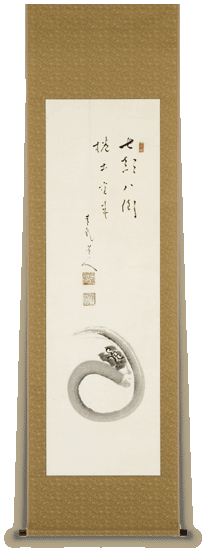
Enso Daruma


Mamiya Eiju (1871-1945)
(signed) Blue Dragon Hermit

The inscription is the Japanese version of the English proverb, "What does not destroy you makes you stronger." Daruma dolls, very popular in Japan, spring right back up, no matter how many times they are knocked down. In our lives, we are often knocked down and suffer reverses, but the key to success is not to give up, to persevere. Mamiya was a very creative Zen artist, and brushed many kinds of Daruma. Is this one halfway up? Or halfway down? Nicely brushed, delightfully composed, this is a wonderful Zenga.

About the Artist

Mamiya Eiju (also pronounced Eishu) was trained in the traditional manner at Ryutaku-ji under Tengan, Tenryu-ji under Gasan, and Empuku-ji under Shaku Soen (from whom he received Dharma-transmission), but eventually became an activist, forward-looking Zen master as abbot of Hoko-ji.

Eiju lectured widely, wrote many books, and made radio broadcasts to promote Zen as a vital force in contemporary society. He loved to do calligraphy and paint and left many fine examples of Zen art on both traditional and modern themes. (He once brushed a Zen cross for a Japanese Christian.) Eiju was solidly built with a forceful personality but his brushwork is soft, gentle, and quiet. His Zen art has a pleasant, calming effect on the viewer.

© 2006 Shambhala Publications
www.Shambhala.com

:::::::::::::::::::::::::::::::::::::::::::::::::::::::::::::::::::::::::::::::::::::::::::::::::::::

Daruma Museum, Japan

12/01/2006

Takada Keihoo

:::::::::::::::::::::::::::::::::::::::::::::::::::::::::::::::::::::::::::::::::::::::::::::::::::::

© 高井あきひろ
http://www004.upp.so-net.ne.jp/a-takai/keiho.html

:::::::::::::::::::::::::::::::::::::::::::::::::::::::::::::::::::::::::::::::::::::::::::::::::::::

Takada Keiho, Painter, (1674~1755)
Ceiling Painting at Temple Shinraku-In

  信楽院天井画: 雲龍図 


「高田敬輔(1674~1755)」について

高田敬輔は、江戸時代中期の画家で、私の母方の先祖に当たり、徳左衛門隆久と名乗っていました。
敬輔は号で、この他に竹隠斎、梅桃老人、眉間毫翁という号があります。
(敬輔は2代目高田徳左衛門、私の祖父は12代目高田徳左衛門)

高田家は、清和源氏の祖、六孫王経基の次男源満政の流れをくむ尾張源氏高田氏族で、戦国時代~
安土桃山時代には織田信長の家臣でしたが、江戸時代に入ってからは仕官せず、苗字帯刀を許されて はいましたが町人として暮らしていました。敬輔の曾祖父の代に近江日野へ移住し製薬業を家業として いました。

敬輔ははじめ独学で絵の基本を身につけた後、京狩野四代目狩野永敬に師事し、また雪舟の画法を学 んで高田派といわれる画風を生み出しました。門人には曽我蕭白、月岡雪鼎、島崎雲圃ら著名な画家がいます。敬輔自身も当時は高く評価されており、晩年日野に隠棲しなければ、狩野山楽や海北友松にも比肩する大家となっただろうとも言われていました。朝廷や幕府からの依頼で絵を描くことも多かったよう で、その功績から従八位上豊前大目に叙せられました。また浄土宗の仏理にも明るく、「無量寿経曼陀 羅図」や「選択集第十六章之図」をはじめとする仏画も多くみられ、62歳で法橋、69歳で法眼に叙せられ、 以後「高田法眼」と称しました。

敬輔は1755年に82歳で没し、その後次第に忘れられていきましたが、1970年代に入って、ボストン美術館にあった門人・曽我蕭白の絵が再評価される中で、その師として、ボストン美術館研究員のマニー ・ヒックマン氏や京都工芸繊維大学の土居次義教授(故人)により研究が開始されました。最近では、滋賀県立近代美術館主任学芸員の國賀由美子さんや学習院大学大学院人文科学研究科博士後期課程在学 中の山本ゆかりさんが研究をされており、海外では、ヒックマン氏がアメリカで研究を続けておられます。

代表作は、戦国大名蒲生家の菩提寺である浄土宗の仏智山信楽院大松寺(滋賀県蒲生郡日野町大字 村井)本堂にある天井画で、雲龍図(18畳)、八大竜王図(12畳)、韋駄天図(12畳)、飛天図2面(各 6畳)、蓮華・蓮弁・楽器・瑞鳥図(18畳)からなります。


Another Dragon 「龍図(降龍)」
78歳作 Painted at age 78


Daruma    「達磨図」 
 紙本墨画、日初寂顕賛 


More Paintings by Takada Keihoo
*高井章博が所蔵する高田敬輔の画幅

:::::::::::::::::::::::::::::::::::::::::::::::::::::::::::::::::::::::::::::::::::::::::::::::::::::

Daruma Museum, Japan

Soga Shohaku

:::::::::::::::::::::::::::::::::::::::::::::::::::::::::::::::::::::::::::::::::::::::::::::::::::::

Soga Shohaku 曽我蕭白1730–1781

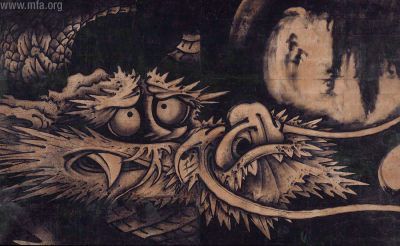
A recent program of NHK featured the famous dragons of this master painter. Here are some from the Museum of Fine Arts, Boston, painted around 1763.

雲龍図 Dragon in Clouds
They were a set of four paintings, painted on the upper sliding doors (fusuma) of a temple in Japan. They inclucde the tail, claws and face of the dragon.
Click on the Museum Logo below to see the other parts of this dragon.
襖絵の雲龍図


Image: 165.2 x 270.7 cm (65 1/16 x 106 9/16 in.)

ooo ooo ooo ooo ooo

龍虎図 Dragon and Tiger


One of a pair of hanging scrolls; ink on paper
Image: 133.5 x 53.6 cm (52 9/16 x 21 1/8 in.)

Both are from the William Sturgis Bigelow Collection

©

ooo ooo ooo ooo ooo ooo ooo ooo ooo

One more dragon from the Boston Museum Collection:

Maruyama Ôkyo, 1733–1795
龍図 Dragon
Maruyama ookyo, Maruyama okyo


One of a pair of hanging scrolls; ink on paper
Image: 134.7 x 89.4 cm (53 1/16 x 35 3/16 in.)

MFA Boston, William Sturgis Bigelow Collection

:::::::::::::::::::::::::::::::::::::::::::::::::::::::::::::::::::::::::::::::::::::::::::::::::::::

Exhibition at the Kyoto National Museum, 2005

The Shohaku Show explores the life and works of the iconoclastic Edo-period painter Soga Shohaku (1730-1781), who has long been believed to come from the province of Ise (now Mie Prefecture). His many works in this area even today appear to confirm this. However, records indicate that from his father's generation the family lived in Kyoto, where many eminent painters, including Yosa Buson, Ike no Taiga, Maruyama Okyo, Nagasawa Rosetsu, and Ito Jakuchu, were active.

Ranking in line with such figures, Shohaku developed his own distinctive style by deviating from the contemporary art scene and professing to the then outdated style of the Muromachi (1392-1572) painter Soga Jasoku (d. 1483), undoubtedly in an attempt to undermine the overwhelming popularity of the realist painter Maruyama Okyo (1733-1795).

Most anecdotes on Shohaku describe an arrogant, brazen, aggressive individual. Though an oversimplification, his social background and a comparison to the life of his contemporary, Ito Jakuchu (1716-1800), may offer some insight into Shohaku's unconventional character. The artist Jakuchu was born as the first son of a prosperous vegetable wholesaler in the Nishikikoji district of Kyoto and lived comfortably for most of his life without having to worry about his livelihood.

He painted as he liked and did not have to sell his works. Shohaku, on the other hand, was born to a wealthy merchant family in Kyoto, which also had a branch store in Edo (now Tokyo), however, by age seventeen, he was without family--he lost his older brother at age eleven, his father at age fourteen, and his mother at seventeen, and appears to have had a younger sister, who remains largely unknown. Such circumstances most likely influenced the artist's works and worldview.

This prolific painter produced many works from his youth to his prime in Ise and the Banshu area (now southern Hyogo Prefecture), and settled back down in Kyoto only in his forties. This retrospective offers a look into Shohaku's world by exploring his childhood and his road to success as a painter through some 120 works, including paintings from collections in the U.S., Germany, and France. Enjoy Shohaku's diverse range and styles through his paintings that reflect his uninhibited, wild and soft, gentle sides.

© Kyoto National Museum
http://www.kyohaku.go.jp/eng/tokubetsu/050412/shoukai/index.htm

:::::::::::::::::::::::::::::::::::::::::::::::::::::::::::::::::::::::::::::::::::::::::::::::::::::

Daruma by Soga Shohaku


© www.wombat.zaq.ne.jp/kaitekido/

:::::::::::::::::::::::::::::::::::::::::::::::::::::::::::::::::::::::::::::::::::::::::::::::::::::

Daruma Museum, Japan