Showing posts with label haiku. Show all posts

10/26/2012

Matsuo Basho

[ . BACK to DARUMA Museum TOP . ]
:::::::::::::::::::::::::::::::::::::::::::::::::::::::::::::::::::::::::::::::::::::::::::::::::::::

- Haiku by Matsuo Basho 松尾芭蕉 -

featuring the kanji for dragon .


The main WKD KIGO DATABASE entry is here

. Kigo and Haiku about Dragon .

. Matsuo Basho 松尾芭蕉 - Archives of the WKD .

::::::::::::::::::::::::::::::::::::::::::::::::::::::::::::::::::::::::::::::::::::::::::::::::::::: 


龍宮も今日の潮路や土用干
龍宮もけふの潮路や土用干
ryuuguu mo kyoo no shioji ya doyoo boshi

there is a tide way
to the Dragon palace today -
airing all things


written in 1677, third day of the third lunar month
延宝5年3月3日
This is the year when Basho decided, at age 34, to become a professional "haikai master" 俳諧師.
This was the day of the great spring flood tide.
The sea receeded so much that even the folks at the Dragon Palace could air their belongings on this occasion.
This hokku shows the gentle humor and vivid imagination of Basho, mixing real events with old legends.


. doyoo-boshi 土用干 airing during the dog-days .
kigo for late summer


The legend of Urashima Tarō 浦島太郎 and the
. Ryūgū-jō 竜宮城 the Dragon Palace .


:::::::::::::::::::::::::::::::::::::::::::::::::::::::::::::::::::::::::::::::::::::::::::::::::::::


source : itoyo/basho
Nara, Yoshino, Ryumon Dragon Gate Waterfall
at the foot of mount Ryumondake (Dragon Gate Peak), Yoshino 吉野.
奈良県吉野町大字平尾龍門瀧 - 龍門岳

Basho is alluding the the famous Chinese poet 酒仙人李白, who loved to drink while observing beautiful nature and waterfalls.

南見瀑布水 挂流三百丈 噴壑數十里
falling straight down for three thousand JO 丈
it looks as if the Milky Way
had fallen from the sky


. Li Po, Li Bo, Li Bai 李白 .


龍門の花や上戸の土産にせん
ryuumon no hana ya joogo no tsuto ni sen

written in 1688、Basho at age 45 (Oi no kobumi 笈の小文)
This hokku has the cut marker YA in the middle of line 2.


Dragongate Falls
flowers opening — a gift
for my drinking friends

Tr. Barnhill


Dragon Gate—
a splendid souvenir
for my drinking friends

Tr. ? publishersrow.com


source : itoyo/basho


and another one from the same occasion

酒のみに語らんか ゝる瀧の花
sakenomi ni kataran kakaru taki no hana / sake nomi ni

I'll tell my drinking friends
of these blossoms
hanging over the waterfall

Tr. ? scribd.com


drinking friends
to talk I'll hang over like this
a waterfall of flowers

Tr. Reichhold


There is a stone memorial for this haiku
at the temple Jookaiji 浄閑寺 Jokai-Ji in Yoshino.
奈良東吉野村浄閑寺


. Dragon Waterfalls  龍の滝 .


MORE - hokku about drinking sake by
. Matsuo Basho 松尾芭蕉 - Archives of the WKD .

MORE - hokku about Yoshino
. Matsuo Basho 松尾芭蕉 - Archives of the WKD .

:::::::::::::::::::::::::::::::::::::::::::::::::::::::::::::::::::::::::::::::::::::::::::::::::::::


五月雨や龍燈あぐる番太郎
samidare ya ryuutoo aguru Bantaroo

samidare rain -
the "Dragon Lantern" shines
from the flood warden's hut


written in 1677 延宝5年, Basho at age 34


Bantaro, tsujiban kidoban 辻番(木戸番, 橋番) is a flood warden or bridge warden, who has to keep an eye on the water level to warn people of imminent danger. They were very important in the Edo period.
banta 番太 caretaker of something
When the flood warden puts out his lamp to warn people, it looks almost like the "Dragon Lamp", a natural phenomenon observed along the seacoast of Japan.
Basho had worked for the Water Department of the Edo Government and maybe spent some time as a Bantaro himself.

This is a hokku where Basho pictures the customs of the Edo period very well.


source : 龍燈、龍灯、竜灯- wikipedia


. ryuutoo 龍燈 Ryuto, "dragon lantern" .
A phenomenon at the Ariakekai sea in Kagoshima, Kyushu, in the evening hours.
It is also seen in other parts of Japan as a light that the Dragon God sends out to honor the deities of Shinto and Buddhism in Japan.
kigo for mid-autumn


. samidare 五月雨 rain in the fifth lunar month .
Now it refers mostly to the rain during the Rainy Season.


mizu bannin 水番人 water supervisors
under the mizu bugyoo of Edo
source : edomatsu/josui


. Ryuuguu jinja 龍宮神社 Ryugu Jinja - Dragon Palace .
Shrines in Japan


. Ryuutooki 龍燈鬼 Ryutoki .
Demon carrying a Dragon Lantern


. Matsuo Basho 松尾芭蕉 - Archives of the WKD .

:::::::::::::::::::::::::::::::::::::::::::::::::::::::::::::::::::::::::::::::::::::::::::::::::::::

. 龍燈 / 龍灯 / 竜灯 と伝説 Legends about Ryuto, "Dragon Lantern" .

::::::::::::::::::::::::::::::::::::::::::::::::::::::::::::::::::::::::::::::::::::::::::::::::::::: 

[ . BACK to WORLDKIGO . TOP . ]
[ . BACK to DARUMA MUSEUM TOP . ]
- #ryuto #dragonlantern -
::::::::::::::::::::::::::::::::::::::::::::::::::::::::::::::::::::::::::::::::::::::::::::::::::::: 

1/04/2012

Mogura earth dragon

[ . BACK to DARUMA Museum TOP . ]
:::::::::::::::::::::::::::::::::::::::::::::::::::::::::::::::::::::::::::::::::::::::::::::::::::::

Mogura モグラ; モグラモチ (土竜; 土龍)
"earth dragon", mole - Maulwurf


enso 偃鼠 (old name of the mole, from China)


quote
Moles
are small cylindrical mammals adapted to a subterranean lifestyle. They have velvety fur; tiny or invisible ears and eyes; and short, powerful limbs with large paws oriented for digging. The term is especially and most properly used for the true moles, those of the Talpidae family in the order Soricomorpha found in most parts of North America, Asia, and Europe.

It also refers to other completely unrelated mammals of Australia and southern Africa which have also evolved the mole body plan; while it is not commonly used for some talpids, such as desmans and shrew-moles, which do not fit the common definition of “mole” as well.

Although the mole can be eaten, the taste is said to be deeply unpleasant.
© More in the WIKIPEDIA !

:::::::::::::::::::::::::::::::::::::::::::::::::::::::::::::::::::::::::::::::::::::::::::::::::::::


Matsuo Basho wrote, after moving to Fukagawa:


氷苦く偃鼠が喉をうるほせり
koori nigaku enso ga nodo o uruhoseri

the ice tastes bitter -
just enough for a mole
to moisten his throat


Written in 延宝9年(天和元年 Basho age 38.
The water he had saved in a pot had frozen and when he tasted a bit, it was too bitter.
This poem shows the great poverty of Basho at that time. The drinking water for the population around Fukagawa in Edo was a great problem. There were vendors of clean water walking the streets, but a poor poet could not buy that. Basho must have felt like a dobunezumi ドブネズミ a sewer rat.


ice is bitter
in the mouth of the rat
quenching its thirst

Tr. David Barnhill


Basho is traveling by foot on an arduous journey, without creature comforts. He is dirty, exhausted, hungry, thirsty, and lonely. He stops at a hut in Japan's Fukagawa region to drink some water. The water there is not potable, and is disease ridden. Residents purchase imported drinking water from vendors. Basho may have been without the funds to purchase a container of drinking water and is forced to sip the bitter, dirty water no one in the region, except for the very poor, drink. Does the wandering poet feel like an animal, drinking out of desperation? This poem is filled with sabi (lonely beauty), sensitivity, and poignant sadness.

Is this hokku a reference to the following verse in the Daoist Zhuangzi that admonishes one to live within their own means and to find happiness within that experiential sphere?

ice, tasting bitter
in the mouth of a sewer rat,
quenches his thirst

Tr. Ueda


"A sewer rat drinks from a large river, yet the amount of water he takes is just enough to quench his thirst."
Tr. by Makoto Ueda

MORE comments from Basho and his interpreters:
source : books.google.co.jp

Is Basho, by writing this hokku, ruminating on his current situation in life, reminding himself to be thankful for the breath he breathes, knowing that life can take a downward spiral, emotionally and physically, if he harbors and dwells on dissatisfaction? What was he thinking when he composed this poem?
source : simplyhaiku.theartofhaiku.com


- quote by Peipei Qiu
Ice, a bitter taste,
just enough to moisten
the throat of the mole.


This verse seems to be a humorous sketch of the rural life, but the use of an unusual Chinese word, enso (mole), calls the reader’s attention to its hon’i signification. This enso, used in the hokku as a haigon, is in fact from the first chapter of the Zhuangzi. In the account the legendary Chinese ruler Yao wants to cede his empire to a recluse named Xü You, but Xü declines, saying:

You are ruling all under heaven and everything is already in order.
If I were to take your place now, would I be doing it for the name?
A name is subordinate to the reality.
Would I be a subordinate?
A wren nests in the forest using no more than a branch.
A mole drinks from the river taking no more than a bellyful.
Please return and forget about this, my lord.
I have no use with all that under heaven.


With this intertextual reference, we can see that Bashô uses the enso metaphorically to imply his preference for simplicity and spiritual freedom; this hon’i is made possible only through its connection with the Zhuangzi. In this way, Bashô uses the Daoist classic to create novel hon’i of haigon based on an intertextual structure bridging his hokku with the aesthete-recluse tradition celebrated by the Daoist tradition.
- source : http://simplyhaikujournal.com/summer-2013 - Peipei Qiu


. Matsuo Basho 松尾芭蕉 - Archives of the WKD .


quote
- The Complete Works Of Chuang Tzu - Zhuangzi
Hsu Yu said,
"You govern the world and the world is already well governed. Now if I take your place, will I be doing it for a name? But name is only the guest of reality - will I be doing it so I can play the part of a guest? When the tailorbird builds her nest in the deep wood, she uses no more than one branch.
When the mole drinks at the river, he takes no more than a bellyful.
Go home and forget the matter, my lord.

source : Translated by Burton Watson


::::::::::::::::::::::::::::::::::::::::::::::::::::::::::::::::::::::::::::::::::::::::::::::::::::: 


Kawanabe Kyosai 河鍋暁斎 (1831-1889)
Dancing yokai monsters, including the mogura !


Kawasaki Imogura 川越イモグラ Satsuma imo sweet potato monster
mascot from Kawasaki town  紅葉狩り

. satsumaimo, satsuma-imo 薩摩芋, サツマイモ .
Batate, Ipomoea batatas


- - - - -

. yookai, yōkai 妖怪 Yokai monsters – ABC-List .

::::::::::::::::::::::::::::::::::::::::::::::::::::::::::::::::::::::::::::::::::::::::::::::::::::: 


kigo for the New Year

mogura-uchi 土龍打 ( もぐらうち) "hitting the moles"
..... mogura oi 土龍追(もぐらおい)
sending the moles away, mogura okuri 土龍送り(もぐらおくり)
urokomochiuchi, uroko mochiuchi うろこもち打(うろこもちうち 望打ち)

On the 15th day of the first lunar month (koshoogatsu), farmers walked around the fields and prayed that the moles would not destroy their fields and bring danger to the good harvest. They sing special songs and hit the ground with freshly cut bamboo poles. The songs are different in each region of Japan.

This is one of the rural

yoshoku girei 予祝儀礼
special rituals to prevent something bad from happening


土龍打つ子どもでありし我らかな
mogura uchi kodomo de arishi warera kana

hitting the moles -
we act
like children


. Hasegawa Kai 長谷川櫂  .


. "Little New Year" (koshoogatsu) .


SAIJIKI – NEW YEAR OBSERVANCES


::::::::::::::::::::::::::::::::::::::::::::::::::::::::::::::::::::::::::::::::::::::::::::::::::::: 


o to to to to -
a mole falls
from the stone wall


- Gabi Greve, May 2012 -


::::::::::::::::::::::::::::::::::::::::::::::::::::::::::::::::::::::::::::::::::::::::::::::::::::: 


. mole cricket ケラ(螻蛄)kera .


. mogura daikon もぐら大根 "mole radish" .


. mugura 葎 (むぐら) cleavers .
..... mogura もぐら


[ . BACK to WORLDKIGO . TOP . ]
[ . BACK to DARUMA MUSEUM TOP . ]
- #mogura #mole -
:::::::::::::::::::::::::::::::::::::::::::::::::::::::::::::::::::::::::::::::::::::::::::::::::::::

1/01/2012

Haiku from 2012

[ . BACK to DARUMA Museum TOP . ]
:::::::::::::::::::::::::::::::::::::::::::::::::::::::::::::::::::::::::::::::::::::::::::::::::::::

The Language of Dragons

Aubrie Cox
January 01, 2012


I think I can speak for a lot of us in saying that 2011 was a rough year in one way or another, and I can’t think of any better way to start 2012 —also the one year anniversary of Yay Words!— than with poetry.
Wonderful, heartfelt poetry and art.


source : yaywords.wordpress.com


::::::::::::::::::::::::::::::::::::::::::::::::::::::::::::::::::::::::::::::::::::::::::::::::::::: 


out of the cave
of the old year
two eyes of the water dragon


Merrill

::::::::::::::::::::::::::::::::::::::::::::::::::::::::::::::::::::::::::::::::::::::::::::::::::::: 


竜淵に潜めり火星近づけば
ryuu fuchi ni hisomeri kasei chikazukeba

this dragon
hides in the depth of the lake -
as mars approaches


Arai Shuuoo 新井秋鴨 Arai Shuo

Duringthe autumn equinox the dragon goes in hiding to the deepest part of a lake
and during the spring equinox he comes out again, rising to heaven.


::::::::::::::::::::::::::::::::::::::::::::::::::::::::::::::::::::::::::::::::::::::::::::::::::::: 


. Dragons and Haiku .


[ . BACK to WORLDKIGO . TOP . ]
[ . BACK to DARUMA MUSEUM TOP . ]
:::::::::::::::::::::::::::::::::::::::::::::::::::::::::::::::::::::::::::::::::::::::::::::::::::::

12/30/2011

Kit Nagamura

[ . BACK to DARUMA Museum TOP . ]
:::::::::::::::::::::::::::::::::::::::::::::::::::::::::::::::::::::::::::::::::::::::::::::::::::::


dragon and pearl:
curled in morning dew
a whole new year


Kit Nagamura


source : facebook
::::::::::::::::::::::::::::::::::::::::::::::::::::::::::::::::::::::::::::::::::::::::::::::::::::: 


. Dragon and Haiku .


[ . BACK to WORLDKIGO . TOP . ]
[ . BACK to DARUMA MUSEUM TOP . ]
:::::::::::::::::::::::::::::::::::::::::::::::::::::::::::::::::::::::::::::::::::::::::::::::::::::

11/29/2011

- Calligraphy - Joys of Japan

[ . BACK to DARUMA Museum TOP . ]
:::::::::::::::::::::::::::::::::::::::::::::::::::::::::::::::::::::::::::::::::::::::::::::::::::::

Calligraphy from Friends

. Joys of Japan - facebook


:::::::::::::::::::::::::::::::::::::::::::::::::::::::::::::::::::::::::::::::::::::::::::::::::::::


Jon Leniz


:::::::::::::::::::::::::::::::::::::::::::::::::::::::::::::::::::::::::::::::::::::::::::::::::::::


Niko Shodou

. Daruma by Niko Shodou .


龍 - Sárkány - Dragon

2012 a sárkány éve lesz.
Vázlatok az új évhez, kalligráfiákhoz, tusképekhez.

on facebook
- Year of the Dragon
Sketches for a new year, calligraphy and sumi-e


:::::::::::::::::::::::::::::::::::::::::::::::::::::::::::::::::::::::::::::::::::::::::::::::::::::


The Year of the Water Dragon

On January 23 rd, 2012, we enter the Year of the Yang (陽, pinyin: yáng, lit. “sun”; male element Yang) Water Dragon, which appears in a 62 year cycle. It is a year I have been awaiting for a long time. Its symbolism is closely related to East Asian calligraphy, and it also gives me the opportunity to explain my pen name.

Dragons in Far Eastern mythology are benevolent creatures; bearers of wisdom, power, and positive energy. Together with a phoenix, dragon’s Yin (陰, pinyin: yīn, lit. “shadow”; female element Yin) counterpart, they are seen as an auspicious omen. Dragons and their supernatural abilities often appeared in the history of Chinese calligraphy.

The moves of a Master calligrapher resemble those of a dragon in flight.

my pen name 龍涙 (りゅうるい, ryūrui, i.e. “Tears of Dragon”)
“Tears of the dragon” become ink of the soul.


- Blessings of the Dragon Gods -

. . . . .


Ponte Ryuurui
- Beyond Calligraphy -


ryuuhoo 龍鳳 (pinyin: lóng fèng, "dragon and phoenix)


龍鳳呈祥 (Chinese: lóng fèng chéng xiáng, i.e.
"the dragon and phoenix together are a good omen")


ryuushin 龍心 "dragon heart (spirit/mind)")


ryuume 龍馬 Literally it means "dragon horse",
though the meaning of this phrase is "splendid horse", a horse with a dragon spirit.


. . . . .


dawn of day two
so divine
like the dragon

It snows silently.....
the day two
of the dragon year


Hideo Suzuki


it snows heavily -
day two of the Dragon year
with Dragon Snow !


Gabi Greve, Japan


:::::::::::::::::::::::::::::::::::::::::::::::::::::::::::::::::::::::::::::::::::::::::::::::::::::


Steve Weiss

Here is one of my kakizome.
It reads RYŪ (dragon) and is brushed in sōsho.


:::::::::::::::::::::::::::::::::::::::::::::::::::::::::::::::::::::::::::::::::::::::::::::::::::::


Yukari Tsubaki


::::::::::::::::::::::::::::::::::::::::::::::::::::::::::::::::::::::::::::::::::::::::::::::::::::: 

[ . BACK to WORLDKIGO . TOP . ]
[ . BACK to DARUMA MUSEUM TOP . ]
:::::::::::::::::::::::::::::::::::::::::::::::::::::::::::::::::::::::::::::::::::::::::::::::::::::

- Haiga - Joys of Japan

[ . BACK to DARUMA Museum TOP . ]
:::::::::::::::::::::::::::::::::::::::::::::::::::::::::::::::::::::::::::::::::::::::::::::::::::::

Haiga - Joys of Japan -

Contributions from the friends of

. Joys of Japan - Poetry .


::::::::::::::::::::::::::::::::::::::::::::::::::::::::::::::::::::::::::::::::::::::::::::::::::::: 


. Kit Nagamura .


::::::::::::::::::::::::::::::::::::::::::::::::::::::::::::::::::::::::::::::::::::::::::::::::::::: 


year of the dragon ~
its joyful spirit
revivified


Elaine Andre


::::::::::::::::::::::::::::::::::::::::::::::::::::::::::::::::::::::::::::::::::::::::::::::::::::: 


Pat Geyer

:::::::::::::::::::::::::::::::::::::::::::::::::::::::::::::::::::::::::::::::::::::::::::::::::::::


Karen Cesar
The image is by Ivan Yakovlevich Bilibin


:::::::::::::::::::::::::::::::::::::::::::::::::::::::::::::::::::::::::::::::::::::::::::::::::::::


::::::::::::::::::::::::::::::::::::::::::::::::::::::::::::::::::::::::::::::::::::::::::::::::::::: 

MORE
. Dragon and Haiku


[ . BACK to WORLDKIGO . TOP . ]
[ . BACK to DARUMA MUSEUM TOP . ]
:::::::::::::::::::::::::::::::::::::::::::::::::::::::::::::::::::::::::::::::::::::::::::::::::::::

11/28/2011

- Haiku - Joys of Japan -

[ . BACK to DARUMA Museum TOP . ]
:::::::::::::::::::::::::::::::::::::::::::::::::::::::::::::::::::::::::::::::::::::::::::::::::::::

Haiku - Joys of Japan -

Contributions from the friends of

. Joys of Japan - Poetry .


:::::::::::::::::::::::::::::::::::::::::::::::::::::::::::::::::::::::::::::::::::::::::::::::::::::


起き直竜
あ!ガタガタ江戸!
あと案年。。。

Okinaoru.
Ah! Gatagata Edo!
Ato antoshi...

The Dragon awakes.
Whoa! Ancient Tokyo's shaking!
Then, a Peaceful Year.


Richard Newton

(Strong earthquake on January 1.)
. Sunday, January 1, 2012 .

::::::::::::::::::::::::::::::::::::::::::::::::::::::::::::::::::::::::::::::::::::::::::::::::::::: 


with all those dragons
on her new kimono
the scent of perfume

year of the dragon
dancing the bunny hop
one last time

first dream
the dragon within me
just blowing smoke


Johnny Baranski


:::::::::::::::::::::::::::::::::::::::::::::::::::::::::::::::::::::::::::::::::::::::::::::::::::::


new year's eve rabbit ~
at the edge of the water
waits for a dragon


Francis Tugayé


:::::::::::::::::::::::::::::::::::::::::::::::::::::::::::::::::::::::::::::::::::::::::::::::::::::


"First Dreams of the year"
a dragon puts his tail
in my sleep


Letitzia Iubu


::::::::::::::::::::::::::::::::::::::::::::::::::::::::::::::::::::::::::::::::::::::::::::::::::::: 

year’s end
the dragon’s tale
begins


Karen Cesar


:::::::::::::::::::::::::::::::::::::::::::::::::::::::::::::::::::::::::::::::::::::::::::::::::::::


sake sunrise
the dragon within me
slow to awaken


Johnny Baranski

::::::::::::::::::::::::::::::::::::::::::::::::::::::::::::::::::::::::::::::::::::::::::::::::::::: 


dragon and tiger -
rain and wind and
Japanese art


. Gabi Greve .

::::::::::::::::::::::::::::::::::::::::::::::::::::::::::::::::::::::::::::::::::::::::::::::::::::: 


新年快樂
breathes the dragon
into my scorched ear

behind the dragon's
fearful grin
your gentle smile

you the dragon's snarl
I the whip of his tail
we dance the year in

you a monkey
me a monkey too
we dance the dragon


Donall Dempsey


:::::::::::::::::::::::::::::::::::::::::::::::::::::::::::::::::::::::::::::::::::::::::::::::::::::


MORE
. Dragon and Haiku


[ . BACK to WORLDKIGO . TOP . ]
[ . BACK to DARUMA MUSEUM TOP . ]
:::::::::::::::::::::::::::::::::::::::::::::::::::::::::::::::::::::::::::::::::::::::::::::::::::::

1/30/2008

camphor wood

[ . BACK to DARUMA Museum TOP . ]

:::::::::::::::::::::::::::::::::::::::::::::::::::::::::::::::::::::::::::::::::::::::::::::::::::::

Made from special "golden" camphor wood
oogon kuzu 黄金樟


This is a special wood gained only from very large trees. It has special whirls and patterns and a sheen of gold.


Detail of the head


© shouryu.com


:::::::::::::::::::::::::::::::::::::::::::::::::::::::::::::::::::::::::::::::::::::::::::::::::::::


CLICK for more statues.


Daruma statue made from Golden Camphor wood


mountain retreat ...
a hermit catching
dragons


:::::::::::::::::::::::::::::::::::::::::::::::::::::::::::::::::::::::::::::::::::::::::::::::::::::


CLICK for more photos


This large 11-headed gilt statue, built sometime in the 8th century, stands over nine meters high, making it the largest wooden statue in Japan. Folklore says this wooden statue was carved from a giant camphor tree by the monk Tokudo in 721 AD, who made two images from the same tree.

The first image was enshrined in a temple in Nara Prefecture, while the second (the statue now at Hase Dera in Kamakura) was cast into the sea with prayers that it float to an area where it had greatest karmic connection and thereafter save souls in that area. According to legend, it washed up on shore in 736, at Nagai, in the Miura Peninsula, slightly south of Kamakura, glowing brightly, it is said, and later it was transferred to its present site at Hase Dera in Kamakura.

source : Mark Schumacher
KANNON BOSATSU, KANNON BODHISATTVA


:::::::::::::::::::::::::::::::::::::::::::::::::::::::::::::::::::::::::::::::::::::::::::::::::::::

Daruma Museum, Japan


[ . BACK to World Kigo Database . ]

:::::::::::::::::::::::::::::::::::::::::::::::::::::::::::::::::::::::::::::::::::::::::::::::::::::

1/09/2008

Water Dragons

[ . BACK to DARUMA Museum TOP . ]

:::::::::::::::::::::::::::::::::::::::::::::::::::::::::::::::::::::::::::::::::::::::::::::::::::::

Australian Water Dragon,
Physignathus lesueurii


CLICK for more reference


The Australian water dragon, Physignathus lesueurii, is an arboreal agamid species native to Eastern Australia from Victoria north to Queensland, there is also a small population in the South-East coast of the State of South Australia.

Australian water dragons have long powerful limbs and claws for swimming and climbing, and have a prominent nuchal and vertebral crest. (A nuchal crest is a central row of enlarged spikes at the base of the head. These spikes continue down the spine, getting smaller as they reach the base of the tail.)

CLICK for more photos

Including their tails, which comprise about two-thirds of their total length, adult females grow to about 2 feet (60 centimetres) long, and adult males can grow slightly longer than 3 feet (one metre). Males show bolder coloration, with red chests and larger heads than females. Color is less distinct in juveniles.

© More in the WIKIPEDIA !


Since it hibernates in winter and comes out in spring,
it will be considered a
kigo for SPRING.

They are more visible during the summer months, though, and like to hang around water even in the suburbs.
Anytime you would find them in the shade it is HOT, over 35 degrees ceslius.


:::::::::::::::::::::::::::::::::::::::::::::::::::::::::::::::::::::::::::::::::::::::::::::::::::::

Water dragons are large diurnal arboreal agamid lizards in the genus Physignathus. There are two species, the Chinese water dragon Physignathus cocincinus, and the Australian water dragon Physignathus lesueurii (two sub-species).

They are sometimes kept as pets, especially P. cocincinus, though a full-grown male of that species will measure about three feet (1 meter) total length and thus requires a fairly large enclosure for proper care.

CLICK for more about the CHINESE water dragon P. cocincinus is found throughout South-East Asia, in Thailand, Cambodia, Vietnam and south China. These lizards are semi-aquatic, using their laterally-compressed tails to propel them when swimming. They are able to remain submerged for long periods of time. Like many lizards, water dragons have a parietal eye, a light-sensitive "third eye" located in the top of the head.

Physignathus lesueurii males are easily distinguished from the females as they have a red coloured chest and belly, which is mostly visible when they lift their heads in defensive mode. Generally water dragons are usually shy creatures in the wild that may only make themselves known to the passer by from the sound of them dropping into a waterway. However, in breeding season, the mothers may become more aggressive in order to make themselves known to distract any potential predators from capturing her young. Juveniles are very sociable, playful creatures and are usually found in groups ranging from 3 - 8 young dragons.
© More in the WIKIPEDIA !

:::::::::::::::::::::::::::::::::::::::::::::::::::::::::::::::::::::::::::::::::::::::::::::::::::


CLICK for more ART and the water dragon
"The Japanese Water Dragon"
© by Lisa Hunt

Click image for more!

:::::::::::::::::::::::::::::::::::::::::::::::::::::::::::::::::::::::::::::::::::::::::::::::::::
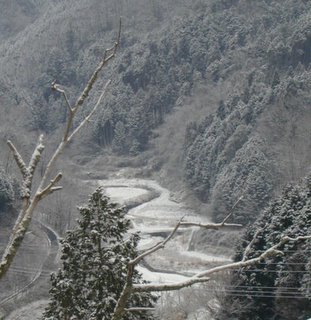

at sunset
bowing reeds encounter
a water dragon


© Graham Nunn, Australia, 2006 Published in HaikuOz

:::::::::::::::::::::::::::::::::::::::::::::::::::::::::::::::::::::::::::::::::::::::::::::::::::::


a water dragon
stationed under a shady tree
the heat haze waivers


Violette Rose-Jones
Australis, March 2009


:::::::::::::::::::::::::::::::::::::::::::::::::::::::::::::::::::::::::::::::::::::::::::::::::::::

TANKA

accepting his fall,
the water dragon drifts *
with the current;
so, tonight I find myself
outside your door

*the eastern water dragon sometimes ventures into trees after insects. Being a bit of a clumsy climber, they frequently fall into streams if they venture too far out on the branches.

© Richard MacDonald, 1996
Shiki Archives


More ecternal Reference: Water Dragon and Haiku


:::::::::::::::::::::::::::::::::::::::::::::::::::::::::::::::::::::::::::::::::::::::::::::::::::::

... AUSTRALIAN SAIJIKI


Daruma Museum, Japan


[ . BACK to World Kigo Database . ]

:::::::::::::::::::::::::::::::::::::::::::::::::::::::::::::::::::::::::::::::::::::::::::::::::::::
1/02/2008

Anchin and Kiyohime Dojoji

[ . BACK to DARUMA Museum TOP . ]

:::::::::::::::::::::::::::::::::::::::::::::::::::::::::::::::::::::::::::::::::::::::::::::::::::::

Anchin and Kiyohime 安珍・清姫伝説

The very short version:
The monk Anchin flees from the unwanted advances of the girl Kiyohime and hides under a huge bell in the Dojoji temple. She follows, turns into a dragon, and curls around the bell, melting it and killing bother herself and Anchin.


The detailed story is HERE:

Road to Kumano


天音山 道成寺 Temple Dojo-Ji
(てんのんざん どうじょうじ) Doojooji

:::::::::::::::::::::::::::::::::::::::::::::::::::::::::::::::::::::::::::::::::::::::::::::::::::


Some photos of the Dragon

CLICK for more photos


from : www.npo-hiroshima.jp/blogn/index.php?e=43


from : www.y-morimoto.com/s_saigoku/s_saigoku05.html


photo from : wpedia.search.goo.ne.jp/search/%B0%C2%C4%C1%A...


MORE PHOTOS !

:::::::::::::::::::::::::::::::::::::::::::::::::::::::::::::::::::::::::::::::::::::::::::::::::::::


Kiyohime : Hidakagawa
Painting by Kobayashi Kokei


© www.tv-tokyo.co.jp


:::::::::::::::::::::::::::::::::::::::::::::::::::::::::::::::::::::::::::::::::::::::::::::::::::

quote
Musume Dojoji むすめどうじょうじ / 娘道成寺

This dance-drama is a Kabuki adaptation of the famous Nô play "Dôjôji". It has been performed for the first time in March 1753 in Edo at the Nakamuraza. The main role of the dance was played by the great star Nakamura Tomijûrô I. The performance's success was beyond expectation and it was extended for several months.

The drama starts in the precincts of Dôjôji Temple where your eyes are drawn to the great hanging bell. The priests of the temple are happy with this new bell, which has just recently been dedicated. There has not been a bell in the temple for a long, long time. The following story explains why:

CLICK for more photos According to legend the temple used to have a handsome priest named Anchin, with whom a young girl named Kiyo-hime fell in love. Since he was a priest, he tried to discourage her affection. But she could not forget him and continued to pursue him with great persistence. Finally after all these attempts had been thwarted, her passionate love for him turned into a deep hatred; and she turned into a fierce, fire-breathing serpent. The terrified priest ran to Dôjôji Temple and hid beneath its huge bell, which the abbot lowered over him. In frustration the serpent coiled itself around the bell and poured fire out from its mouth until the bell melted and the priest burned to death.

Since then no women have been allowed to enter the temple precincts on any account. For a long, long time the temple made do without a bell. But then, just recently, a new bell has been constructed and dedicated. Today a pretty, young girl appears and introduces herself as Hanako, a dancer traveling around the country. She says that she has heard of the new bell at Dôjôji Temple and come out of curiosity to see it. Although she is, at first, refused admittance, her disappointment is so great that it moves the priests' stern hearts. At last they accept her offer to dance in the bell's honor and allow her to enter the grounds.

First she dances with a hat, then with a hand towel, then with one after another. Before long her dancing arouses some strange feelings in the priests for every time she changes her kimono she emits an enigmatic aura. Remembering the story of Anchin and Kiyo-hime, the priests begin to drive her out of the temple. But she just gives them a sardonic smile and climbs atop the huge bell, revealing herself to be the spirit of Kiyo-hime.

Ichikawa Danjûrô IX plays the main role of the dance "(Kyôganoko) Kyoganoko Musume Dôjôji", in January 1896.

source : www.kabuki21.com / Watanabe Hisao

:::::::::::::::::::::::::::::::::::::::::::::::::::::::::::::::::::::::::::::::::::::::::::::::::::::


source
http://www.shiga-miidera.or.jp/treasure/craft/03.htm
temple bell from Miidera with a
"Dragon Head" ryuuzu 龍頭 decoration


咲くからは 龍頭にとどけ 山桜
saku kara wa ryuuzu ni todoke yamazakura


if you are going to blossom
please reach the dragon head of the bell -
mountain cherry tree


Keishi 慶子 (けいし)
pen name of Nakamura Tomijuro the first

CLICK for original LINK

shodai Nakamura Tomijuuro 初代中村富十郎,
琴嶺舎 Kinreisha
1719 - August 3, 1786
Kabuki actor in Kyoto, mostly young female roles

He played this maiden of the Dojoji temple and wrote a haiku about it, showing his sincere with to impersonate the maiden well.

Tr. Gabi Greve
:::::::::::::::::::::::::::::::::::::::::::::::::::::::::::::::::::::::::::::::::::::::::::::::::::::


. Bell, Temple Bell (kane) and related KIGO  


Kabuki theater 歌舞伎 and related KIGO


Daruma Museum, Japan


[ . BACK to World Kigo Database . ]

:::::::::::::::::::::::::::::::::::::::::::::::::::::::::::::::::::::::::::::::::::::::::::::::::::::

1/03/2007

Dragon Haiga

:::::::::::::::::::::::::::::::::::::::::::::::::::::::::::::::::::::::::::::::::::::::::::::::::::::


London morning dew -
fumes through my nostrils and mouth
like an Eastern dragon !


:::::::::::::::::::::::::::::::::::::::::::::::::::::::::::::::::::::::::::::::::::::::::::::::::::::


From India :

Kala Ramesh

Dr. Angelee Deodhar

:::::::::::::::::::::::::::::::::::::::::::::::::::::::::::::::::::::::::::::::::::::::::::::::::::::

Daruma Museum, Japan


INDIA Saijiki

3/19/2006

Kigo and Haiku about Dragon

[ . BACK to WORLDKIGO  TOP . ]
::::::::::::::::::::::::::::::::::::::::::::::::::::::::::::::::::::::::::::::::::::::::::::::::::::: 

DRAGON and HAIKU
Special page of the World Kigo Database.


Please add your Dragon haiku as a comment !

Learn more about the Asian Dragon!
by Gabi Greve


:::::::::::::::::::::::::::::::::::::::::::::::::::::::::::::::::::::::::::::::::::::::::::::::::::::


dragon, climbing to heaven, ryuu ten ni noboru
龍天に登る / りゅうてんにのぼる

kigo for mid-spring

The dragon in China, as the sacred being. According to the old Chineses records, on the spring equinox, the dragon went off to heaven to take care of the rain for the season, until the equinox in autumn, when he would come down to earth and dive back into the pond.
龍は春分ニシテ天ニ登リ、秋分ニシテ淵ニ潜ム
TATSU 辰 たつ in Japanese.

Look at him HERE !


竜天に昇る地下鉄(メトロ)の通気孔
ryy ten ni noboru metoro no tsuukikoo

a dragon ascends
to the heaven—
a metro’s vent hole


Suzuki Kinue 鈴木きぬ絵
Tr. Fay Aoyagi


... ... ...


龍天に登る絵の壷一枝活く

水煙同人
http://blog.goo.ne.jp/suien74/e/a6e7bea19c2aed78ab2407b0c520f85c

... ... ...


the dragon climbing toward heaven -
the grottoes of DunHuang
almost covered by sand

© PHOTO and Haiku Gabi Greve
Read more about my trip to Dunhuang, China


:::::::::::::::::::::::::::::::::::::::::::::::::::::::::::::::::::::::::::::::::::::::::::::::::::::


kigo for the NEW YEAR


Benten on a Dragon


hatsu tatsu 初辰 (はつたつ) "first dragon"
first day of the dragon

..... jooshinnichi 上辰日(じょうしんにち)

Tatsu matsuri 辰祭(たつまつり)Dragon Festival
. . . CLICK here for Photos !

hatsu tatsu no mizu 初辰の水(はつたつのみず)
first water for the dragon

. . . shio no mizu 潮の水(しおのみず)"tide water"
to be thrown on the roof.

On this day people of old would throw water on the roof and pray for protection from fires during the coming year.

The Dragon, fifth of the twelve signs of the Chinese zodiac.

next zodiac animal is the MI, snake with its kigo:

hatsu mi 初巳 (はつみ) "first snake"
first day of the snake

. . . CLICK here for Photos !

hatsu Benzaiten 初弁財天(はつべんざいてん)
first visit to a Benten shrine

..... hatsu Benten 初弁天(はつべんてん)

fuse mairi 布施参(ふせまいり)
visit a Benten shrine (mairi) and make an offering (fuse)


. Water Deities and KIGO  


:::::::::::::::::::::::::::::::::::::::::::::::::::::::::::::::::::::::::::::::::::::::::::::::::::::


kigo for the mid-summer


. 爬龍船(ハーりーせん / はりゅうせん)Dragon Boat  
Dragon Boat Race ペーロン Peron


:::::::::::::::::::::::::::::::::::::::::::::::::::::::::::::::::::::::::::::::::::::::::::::::::::::
:::::::::::::::::::::::::::::::::::::::::::::::::::::::::::::::::::::::::::::::::::::::::::::::::::::


ready for spring
the bearded dragon
takes off his clothes


the clouds tonight,
a dragon
breathing snow


robert wilson
Simply Haiku Forum

:::::::::::::::::::::::::::::::::::::::::::::::::::::::::::::::::::::::::::::::::::::::::::::::::::::


the dragon lived here
long before man -
knowing my limits


Gabi Greve, click HERE to look at it !
Grottoes in Guilin, China


:::::::::::::::::::::::::::::::::::::::::::::::::::::::::::::::::::::::::::::::::::::::::::::::::::::


our first born son -- the year of the dragon

chibi ~simple-sigh-man~

:::::::::::::::::::::::::::::::::::::::::::::::::::::::::::::::::::::::::::::::::::::::::::::::::::::

Dragons play whirlwind
among the clouds meet and rain
unite earth and sky

R K SINGH
WHCindia

::::::::::::::::::::::::::::::::::::::::::::::::::::::::::::::


in charcoal:
a sharp curve of his tail
the dragon coughs fire!

-kala ramesh, India

:::::::::::::::::::::::::::::::::::::::::::::::::::::::::::::::::::::::::::::::::::::::::::::::::::::


Inspired by the Hokusai Dragons

in the ink,
dragons ascending Fuji,
lightning in winter


~K~
Simply Haiku Forum

:::::::::::::::::::::::::::::::::::::::::::::::::::::::::::::::::::::::::::::::::::::::::::::::::::::

a dragon soars
from the painter's brush
unfettered mind

Gabi Greve about Hokusai Dragons


a little snow -
the dragon down the valley
shows its curves


Snow in the Valley


morning walk -
the Dragon spits fire
from the roof

Morning Walk


the dragon -
now a cloud
in my sky


terrible heat -
the dragon's mouth
wide open

(August 2006)

Gabi Greve

:::::::::::::::::::::::::::::::::::::::::::::::::::::::::::::::::::::::::::::::::::::::::::::::::::::

Words and Water Dragons

at sunset
bowing reeds encounter
a water dragon


Graham Nunn, Australia, 2006 Published in HaikuOz

:::::::::::::::::::::::::::::::::::::::::::::::::::::::::::::::::::::::::::::::::::::::::::::::::::::


typhoon season -
a dragon hovers
over Japan


Gabi Greve, July 9, 2006

:::::::::::::::::::::::::::::::::::::::::::::::::::::::::::::::::::::::::::::::::::::::::::::::::::::


London morning dew -
fumes through my nostrils and mouth
like an Eastern dragon !


Kala Ramesh
Look at the Haiga by Angelee Deodhar


:::::::::::::::::::::::::::::::::::::::::::::::::::::::::::::::::::::::::::::::::::::::::::::::::::::


at sunset
bowing reeds encounter
a water dragon


Graham Nunn
words and water dragons
Brisbane Botanic Gardens, Queensland Poetry Festival


:::::::::::::::::::::::::::::::::::::::::::::::::::::::::::::::::::::::::::::::::::::::::::::::::::::


Dragon Jewel, Dragon Berry (Ophiopogon japonicus) and HAIKU


::::::::::::::::::::::::::::::::::::::::::::::::::::::::::::::::::::::::::::::::::::::::::::::::::::: 

MORE

. Dragon haiku of this BLOG .


. Dragon Haiku by Matsuo Basho 龍 .


. Chinese origin of Japanese kigo .


[ . BACK to DARUMA MUSEUM TOP . ]
[ . BACK to WORLDKIGO . TOP . ]

:::::::::::::::::::::::::::::::::::::::::::::::::::::::::::::::::::::::::::::::::::::::::::::::::::::

Hokusai

[ . BACK to DARUMA MUSEUM TOP . ]
::::::::::::::::::::::::::::::::::::::::::::::::::::::::::::::::::::::::::::::::::::::::::::::::::::: 

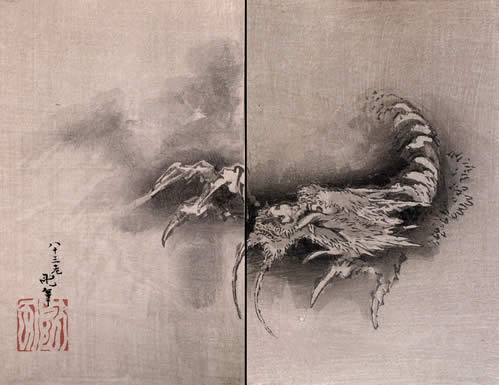
Various Dragons from Hokusai 葛飾北斎


© 2000 The British Museum

Dragon ascending Mount Fuji
from 'One Hundred Views of Mount Fuji' (Fugaku hyakkei), a woodblock print
「富士越龍図」

Japan, Edo period, published AD 1835
Height: 227 mm, Width: 157 mm

Jack Hillier Collection

:::::::::::::::::::::::::::::::::::::::::::::::::::::::::::::::::::::::::::::::::::::::::::::::::::::


silk painting known as
'the dragon on smoke escaping from Mount Fuji'


:::::::::::::::::::::::::::::::::::::::::::::::::::::::::::::::::::::::::::::::::::::::::::::::::::::

© Pacificasiamuseum.org


Illustration of a Dragon from the Manga
Katsushika Hokusai (1760–1849)
1815
Leaf from a bound book, woodblock print, ink on paper
Pacific Asia Museum Collection
Gift of Evelyn and Eleanor Moles, 1982.27.7

:::::::::::::::::::::::::::::::::::::::::::::::::::::::::::::::::::::::::::::::::::::::::::::::::::::


Thundering Dragon at the Ceiling of Temple Shinpuku-Ji
真福寺・本堂. 横須賀市吉井


葛飾北斎の龍図
http://www.von.bne.jp/doragon/tenjyou/ryu-21/1.htm


More Thundering Ceiling Dragons
Thundering Dragons, Nari-ryuu LIST Japanese

:::::::::::::::::::::::::::::::::::::::::::::::::::::::::::::::::::::::::::::::::::::::::::::::::::::

「日月龍図」
Sun, Moon and a Dragon
Three hanging scrolls
と言う三幅の掛け軸みたいのがあって一枚は真っ赤な夕日、真ん中が墨絵の龍で右側に細い三日月の絵.
3点の掛け軸のセットになっていている。

:::::::::::::::::::::::::::::::::::::::::::::::::::::::::::::::::::::::::::::::::::::::::::::::::::::


In 1844 at age 85, Hokusai visited Obuse and spent about six months working on the Ryu (Dragon) and Ho-o (Chinese Phoenix) paintings for the Higashi-machi Festival float.

Read more about Hokusai and Daruma san

:::::::::::::::::::::::::::::::::::::::::::::::::::::::::::::::::::::::::::::::::::::::::::::::::::::


Hokusai Exhibition,
Arthur M. Sackler Gallery, March 2006
Hokusai, By Blake Gopnik

:::::::::::::::::::::::::::::::::::::::::::::::::::::::::::::::::::::::::::::::::::::::::::::::::::::

2012 - Year of the Dragon

初夢や辰の上に立つ富士の山
hatsu yume ya tatsu no ue ni tatsu Fuji no Yama

first dream -
a dragon at the foot
of Mount Fuji


This page inspired some Dragon haiku too.
Please have a look at them here.
Our Dragon Haiku Collection

:::::::::::::::::::::::::::::::::::::::::::::::::::::::::::::::::::::::::::::::::::::::::::::::::::::

Animal Manga by Hokusai


北斎漫画 動物百匹 葛飾北斎  HOKUSAI
.
北斎の名作版本が豆本で登場!
『北斎漫画』は、江戸時代の絵師・葛飾北斎が描いた代表的版本です。現代の漫画とは異なり、あらゆる図柄をアトランダムにまとめたもので、人物、動植物、風景、歴史、妖怪など、その図版は三千数百にも及ぶ百科事典です。
監修・解説 永田生慈

- source : shinise.ne.jp/unsodo/item -

::::::::::::::::::::::::::::::::::::::::::::::::::::::::::::::::::::::::::::::::::::::::::::::::::::: 

. Hokusai and the Big Tsunami Wave .


[ . BACK to DARUMA MUSEUM TOP . ]
[ . BACK to WORLDKIGO . TOP . ]

:::::::::::::::::::::::::::::::::::::::::::::::::::::::::::::::::::::::::::::::::::::::::::::::::::::